Could it work if Verstappen wanted to go to McLaren? F1 Q&A
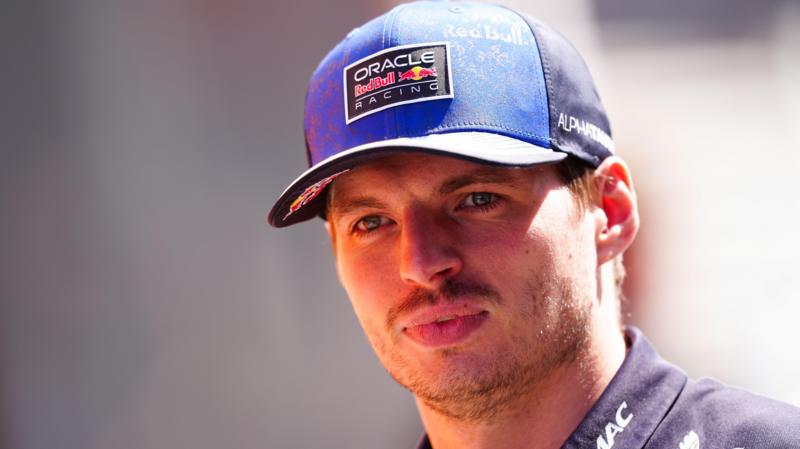
The battle for the drivers' championship has tightened up as Formula 1 prepares for this weekend's Belgian Grand Prix.
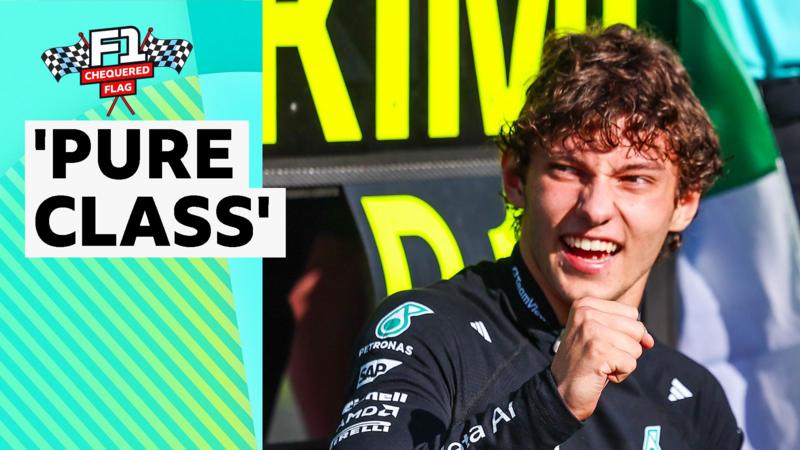
Kimi Antonelli's lead over Mercedes team-mate George Russell has narrowed to 25 points with Ferrari's Lewis Hamilton a further seven point back.
Before the race at Spa-Francorchamps, BBC Sport F1 correspondent Andrew Benson answers your latest questions.
I'm struggling to see how Max Verstappen could go to McLaren. They never have a number one driver and last year Max was laughing at McLaren's decisions when trying to be fair to Lando Norris and Oscar Piastri, such as the swap in Monza for a slow pit stop. Max isn't going to accept a team order to let his team-mate past to keep things fair (like he didn't in Brazil in 2022). Surely it would tear McLaren apart if he went there? - Tim
The first thing to say here is that McLaren Racing chief executive officer Zak Brown has done everything he can to dismiss the idea of Max Verstappen moving to McLaren in the foreseeable future.
Brown said at the British Grand Prix that the talks he had recently with Verstappen's management "didn't go anywhere", that he was "very happy with my two racing drivers" and "what I couldn't offer him (Verstappen) was a seat in my race car".
Be that as it may, Verstappen and his management are exploring their options and McLaren are a team they are considering.
Verstappen is under contract to Red Bull until the end of 2028, but has a performance clause in his contract that is likely to mean he could leave at the end of this year if he wanted.
That clause does not come into effect until October, so there is plenty of time before anything is likely to happen, and sources have told BBC Sport that Verstappen has made no decisions as yet.
Could it work if Verstappen wanted to go to McLaren? Well, first of all, Brown would have to find a way to remove one of his current drivers, world champion Lando Norris or Oscar Piastri.
If he managed to do that, the fundamental basis of McLaren's philosophy is fairness. Their drivers are allowed to race each other and the team will only intervene in specific circumstances, such as those that arose a few times last year.
It's fair to point out that this is a different approach from the one that has traditionally been adopted at Red Bull, but it's the same one as used by Mercedes, another team with which Verstappen has had talks.
Neither would change their approach were Verstappen to join the team, but why would he have a problem with it?
I'm sure he would back himself to win any fight with any team-mate he came up against.
Equally, any team who takes on Verstappen would be aware that they would be taking on a level of stress they might not experience with any other driver, and that it would test their management skills.
But while some might argue Verstappen's singular, no-compromise approach is a reason to be wary of signing him, F1 teams are ultimately about performance. And signing Verstappen is a guarantee of the highest possible performance in the cockpit on arguably the most consistent basis.
For McLaren, who are this season experiencing some of the downsides of being a customer engine team in a way they had not previously, that could be a very attractive proposition as they seek whatever edge they can.
Lewis Hamilton, age 41, has recently won a race for Ferrari. Fernando Alonso, age 44, is consistently out-performing his younger team-mate and probably given a comparative car would also win a race. Are the cars easier to drive or is it that some drivers' ability to drive at the top level has more longevity? - Matthew
It is a fact that grands prix are less physically demanding than they were in, for example, the mid-2000s, when there was refuelling and a tyre war and races were driven flat out from beginning to end.
With tyre and energy management, that is no longer the case.
Make no mistake, though, driving an F1 car is still an highly demanding physical experience, and Hamilton and Alonso are in excellent condition.
The answer is that the real limiting factor for a racing driver as they age is mental rather than physical, as long as they are able to continue to meet the bodily demands.
Drivers tend to lose the desire and commitment that is needed to test themselves to the limit in an extremely dangerous environment.
You have to really want it to perform at the highest level in F1, to drive to the limit every time you get in the car, no matter how competitive it is. And Hamilton and Alonso remain totally committed, and in love with what they are doing.
Combine that with their absolutely exceptional levels of ability - they are, after all, two of the very greatest drivers there have ever been - and you have the reasons they are able to continue to deliver as they do.
But the fact that so few others over the years have been able to do this just goes to show how unusual it is - and how extraordinary what they are doing remains.
Spa is held by many as one of the all-time great circuits. What is it that makes it so good? And will these 2026 cars work well there? - Clive
Spa-Francorchamps, host of this weekend's Belgian Grand Prix, established its reputation as an all-time classic circuit through the challenge it creates for drivers.
Whether in its original eight-mile guise, or the shortened 4.3-mile version used since 1983, it has a combination of flowing, high and medium-speed corners matched by very few circuits in the world. On the F1 calendar, only Suzuka in Japan is a realistic rival, albeit Monaco is exceptional in a different way.
The most famous corner is Eau Rouge, a high-speed left-right flick into and out of a compression that launches the cars uphill into a left over a crest - technically known as Raidillon.
In the dry, on empty tanks on a qualifying lap, Eau Rouge is now what is known as 'easy flat' - ie, the challenge has been reduced because the car is not on the limit of grip through there. Easy flat is a relative term, however. It remains a 200mph corner and a daunting challenge.
In the wet, however, it is as fearsome as ever.
Nowadays, the 'big' corner at Spa is Pouhon, the high-speed downhill double left-hander midway around the lap, which was taken flat-out in the best cars in the last few years but is unlikely to be so this year.
As much as anything, though, it's the way a series of challenging, long corners flow together that makes Spa what it is - in the same way as Suzuka.
Former F1 driver Mark Webber used to say that a lap of Spa "felt like you were going somewhere". In that sense, it is a throwback to the old road courses that used to predominate on the calendar.
These flowed around the contours of a landscape, and evolved organically, by joining up public roads. Just as Spa originally did, even though the parts that used to be public - including Eau Rouge and the following Kemmel Straight up to Les Combes - are now fully closed off.
The other aspect of tracks such as this is the jeopardy factor. Spa is still very dangerous, even in its modern form, as the deaths of Anthoine Hubert in Formula 2 in 2019 and Dilano Van 't Hoff in Formula 4 in July 2023 proved. These risks are heightened in the wet - and it often rains in the Ardennes forests.
The drivers are very well aware of this, and it's all part of the tapestry that makes Spa such an intense experience for them. It's Max Verstappen's favourite circuit, for example, but he says: "It is amazing to drive in the dry, and when you then have a wet qualifying, it's pretty…. I wouldn't say scary but it's really interesting and quite extreme."
As Mercedes boss Toto Wolff puts it, Spa is a reminder that F1 is "still a gladiators' sport".
Will this year's cars work well there? F1 cars are made for tracks such as Spa, but the new engines this year and the particular layout of the circuit mean that the cars will be especially energy starved there.
The batteries will not last long enough for the cars to be at full power throughout the long flat-out sections from La Source, through Eau Rouge and up to Les Combes, or from Stavelot around Blanchimont to the Bus Stop chicane.
Source: BBC Sport. Summary reproduced for informational purposes.
Related
 F1
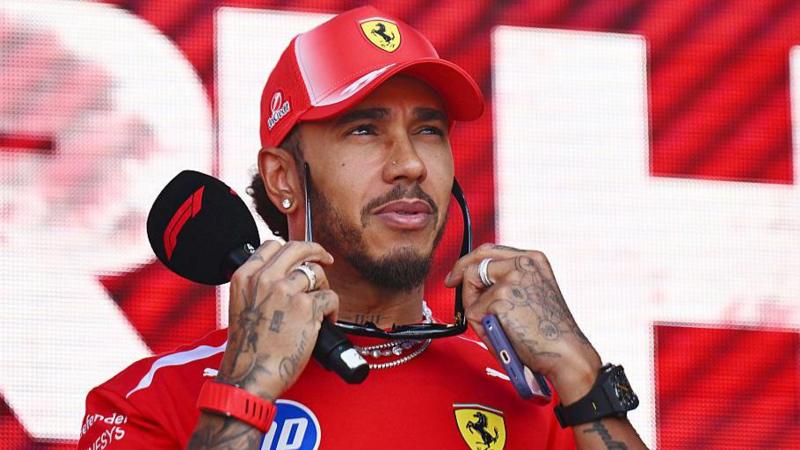
F1Why was Hamilton penalised but not Leclerc? - F1 Q&A
BBC Sport F1 correspondent Andrew Benson answers your latest questions before the Hungarian Grand Prix.
 F1
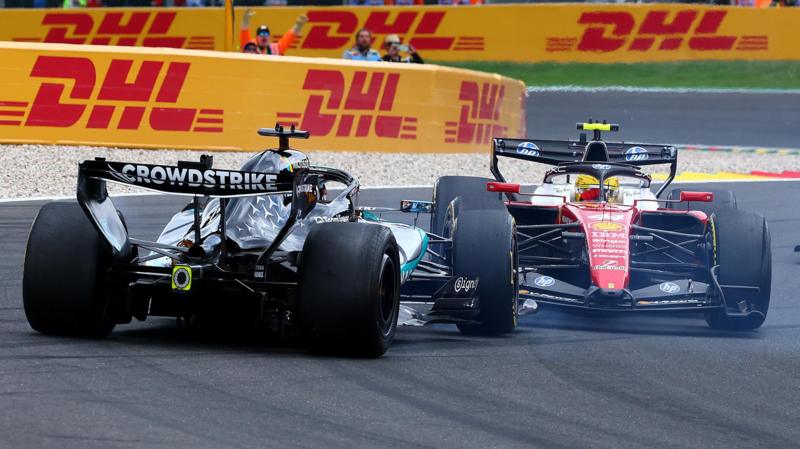
F1Russell 'numb to disappointment' after bitter blow to title hopes
George Russell crashing out at Spa and falling 50 points behind team-mate Kimi Antonelli is a bitter blow to the Briton, writes Andrew Benson.
 F1
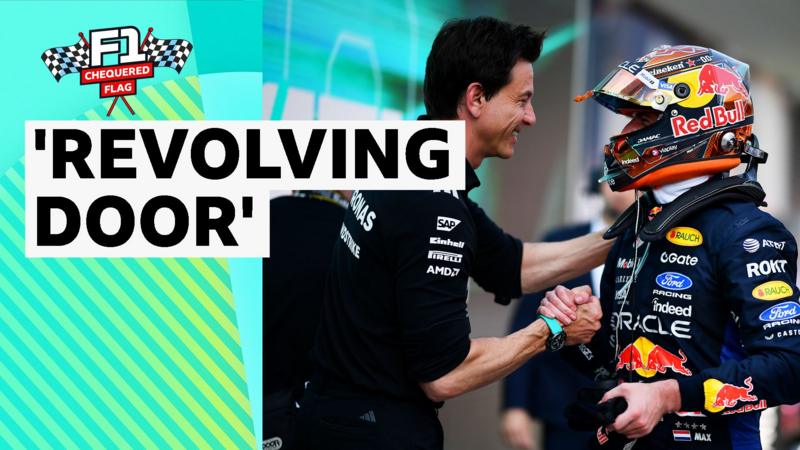
F1Is Verstappen to Mercedes a likely move?
BBC Chequered Flag podcast experts Sam Bird and Rebecca Clancy discuss the liklihood of Red Bull's Max Verstappen making a move to rivals Mercedes.
 F1
F1Title race would be 'done and dusted' without Mercedes reliability issues
BBC F1 commentator Harry Benjamin is joined by Sam Bird and Rebecca Clancy to discuss Kimi Antonelli's victory at the Belgian Grand Prix.
Never miss a headline
The biggest gaming and sports stories, in your inbox. Unsubscribe any time.