I earn £30,000. I'm angry there was no fuel duty cut in the Budget
Chancellor John Healey has unveiled his first Budget.
He announced £100 energy payment for millions and a tax rise on banks, among other measures.
BBC News has been speaking to people on a range of incomes on how they feel about their finances and how the Budget affects them.
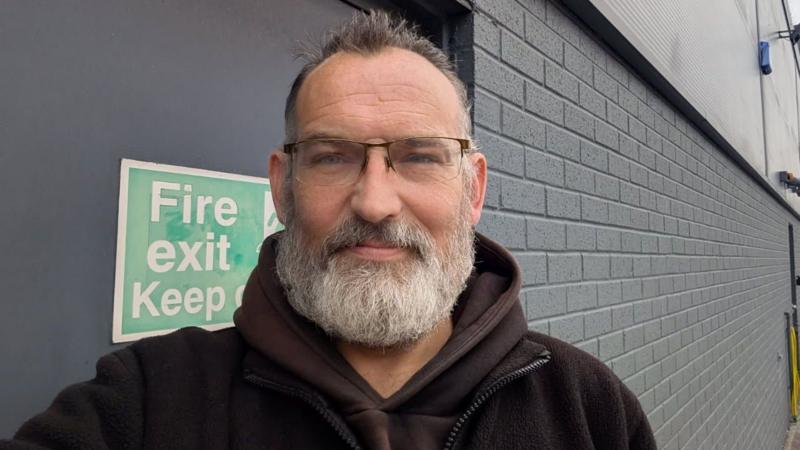
Dave Herbert is a professional driver on £30,000 a year. He moves cars between showrooms and does deliveries and says fuel prices have been "crazy" this year.
He spends around £350 a month on petrol for work and personal use. That's 40% to 50% more than at the start of the year, he says.
He has to commute into Cardiff, a 62-mile round trip from his home in Ynysddu. "I'd love to have a hybrid car but even an entry-level used car is too expensive."
The 48-year-old, who is married with a 12-year-old daughter, says he has to find the extra money for fuel "from an already tight budget" and "dreads" filling up at the pump.
The only measure Dave wanted to see was a cut to fuel duty, and he was disappointed this didn't happen.
"I'm pretty angry, really. Nothing has been thrown my way," he says.
The main fuel duty rate has been frozen at 52.95p per litre until the summer, but Dave says: "It sounds like they're giving us something by keeping it frozen but they're actually still taking it off us."
Emily Nelson completed her A-levels last year and like thousands of her peers has been unable to find a job since leaving college.
The 19-year-old from Swindon wants to be an animator but in the meantime is applying for retail and sales roles and apprenticeships. Most of the time, she doesn't hear back from potential employers.
"I'm trying my best, it's all you really can do. It's kind of suffocating in a way. You see everyone else managing, and you feel like you're not."
Emily was initially disappointed with the Budget, and then frustrated that the government is waiting for the outcome of a review into youth unemployment before legislating next year.
"I'm glad the government is aware, and that they have a plan," she said. "But it's a bit frustrating that we have to wait a little longer to find out what it is."
However, she adds: "It's not happened today, but it will happen."
She wants to see more funding to businesses so they can take on more young employees. She'd also like to see more money for training and the government's Jobs Guarantee , external scheme extended.
The scheme, being rolled out across England, Scotland and Wales, guarantees fully funded, six-month paid jobs for 18 to 24-year-olds who have been on universal credit and looking for work for 18 months. But Emily thinks people should be eligible after a year.
Robert Portlock, 29, has always lived with his parents in Gateshead and would love to move out. But he doesn't think he can afford to.
Rent would be his biggest concern, he says, explaining that a small flat in his area would cost him about two-thirds of his monthly wage.
"Council tax and energy bills would add to it. Food too. I'd need a TV licence, broadband, my car and some money to socialise. By that point I'd be in the minus."
Robert's biggest expense currently is his car, which he says he needs for his 32-mile round trip to work at Newcastle Airport. But he's paying £750 a month in car finance, insurance, fuel and tax.
The Budget "doesn't go far enough", he says, adding he would have liked to have seen more help with the cost of living, including a cut in fuel duty.
The £100 household energy allowance over a year is less than £10 a month, he says, while action on tariffs on food items will save only £21 a year, or £1.75 per month.
"What am I going to buy with that - a Freddo?"
He would like to get on the housing ladder but for now it feels a distant prospect. The government has announced a scheme to help first-time buyers in England who have a deposit of 2.5%. It also confirmed plans for a new First Time Buyer Isa , external , to replace the Lifetime ISA, which will see the government contribute towards the cost of a first home.
But Robert says neither policy will make much difference to him. "You can't save if you don't have money. They seem to be acting as if inflation hasn't happened."
Chloe Chin-Saad's husband passed away four years ago and her biggest worry is the cost of living.
She's very grateful that the rent she pays on her south London maisonette is set below the market rate as it is housing association accommodation, but says life was easier when she shared the bills. "Two incomes make a massive difference."
She lives with her 16-year-old son, and says her energy bill has risen sharply over the past year and she now pays about £200 a month on gas and electricity.
"We try to be more aware, we think more about how long we run the hot water when we do the dishes."
Chloe, 40, and her son have cut back on luxuries like going to M&S and the cinema, and she now tries to limit the weekly food shop to £40.
But she can't do anything to reduce her £200 council tax bill, the £250 a month she pays on car finance, or the amount she spends on medicines for her various health conditions, including rheumatoid arthritis.
Two mobile phone bills, and food and pet insurance for her dog also add to her costs. She says the amount she has left over at the end of each month varies, and sometimes she is left with as little as £50.
Chloe says she is "pretty happy" with the Budget, and that "small changes give me hope".
Cutting standing charges on gas, and the £100 household energy payment for households in council tax bands A to D this winter are "definitely going to help", she says.
"It was quite a thoughtful Budget," she adds. "I can see, in years to come, light at the end of the tunnel."
Jonathan Whitwam, who recently joined the Labour Party, works in finance and says, in addition to his mortgage, his biggest outgoing is supporting his two daughters through university. He and his wife, who live in Essex, pay their rent, which is around £18,000 per year.
His daughters will start their working lives with between £45,000 to £60,000 of debt each, plus interest, which will be compounding at £5,000 to £8,000 per year.
"I have no objection to paying for degrees as I think they are a great way of broadening horizons and having great life experience. But I think the interest should be waived or capped below 1%, otherwise it's a noose around their neck for a substantial part of their lifetime."
Jonathan, 52, says the Budget was "very safe", reducing energy costs for his household by getting rid of standing charges, while cutting bills for many people this winter.
However, he wanted taxes to be put up for higher earners like himself in the name of "redistribution" and says there was "nothing" in the Budget on that.
"If we want better roads, hospitals, schools we need to raise more tax," he adds.
Christine Morris, from Worksop, has been retired for eight years and lives on a state pension combined with a small private pension her late husband left her.
"It is very difficult to balance the books," the 78-year-old says. "I do go on holiday, but I'm spending more of my savings to live."
The chancellor said standing charges would be removed from gas bills , but Christine, who has a gas boiler, says it's not clear yet whether she will benefit, because those costs will be added on to the unit rate.
However, she says the £100 household energy payment will help over the winter
"I'm not sure I'll be better off," she says. Instead she thinks she will be "even Stevens".
She was unconvinced by Andy Burnham's pledge to end the triple lock so that from 2030 the state pension will rise at least by inflation or 2.5%, with the money saved used to create a free-at-the-point of use national care service for England sometime "in the next parliament".
Christine thinks the new service will take time to come in. In the meantime, she fears she will "get less pension and still have to pay out the same for any care I need".
What are you hoping for from the Budget? What questions do you have?
Healey to shield low-income pensioners from income tax in the Budget
Source: BBC News. Summary reproduced for informational purposes.
Related
 Economy
Bank of England raises interest rates to 4%, the first increase for more than three years
Base rate increases from 3.75%, and Bank governor signals another rise in near future to combat rising inflation Analysis: Interest rate rise in midst of cost of living crisis will leave many incredulous Business live – latest updates The Bank of England has r
 Economy
Rural voters were feeling left behind before the midterms, poll shows
Polling done for the Guardian shows plummeting support from a former key constituency of Donald Trump’s base Polling conducted by the Harris Poll for the Guardian before the election shows just how angry voters were and points to one key reason Republicans los
 Economy
Thursday briefing: ‘A dignified life for all must be the north star’: economist Isabella Weber answers your questions
In today’s newsletter: From the cost of living to the AI bubble and the fight against fascism, Weber answers Guardian readers’ questions on how to build a fairer economy and world Good morning. As stateside celebrations die down, the Democratic party will be f
 Economy
The RBA says there is ‘excess demand’ in the economy. Households doing it tough might disagree | Greg Jericho
The problem with inflation driven by factors such as wars and supply side shocks is that interest rate rises don’t do much Get our daily political email , free app or daily news podcast On Tuesday this week came the biggest news regarding inflation. No, not th
Never miss a headline
The biggest stories in business and finance, delivered to your inbox. Join thousands of readers — unsubscribe any time.