Keeping roughage and concentrates in the diet when paddock grazing
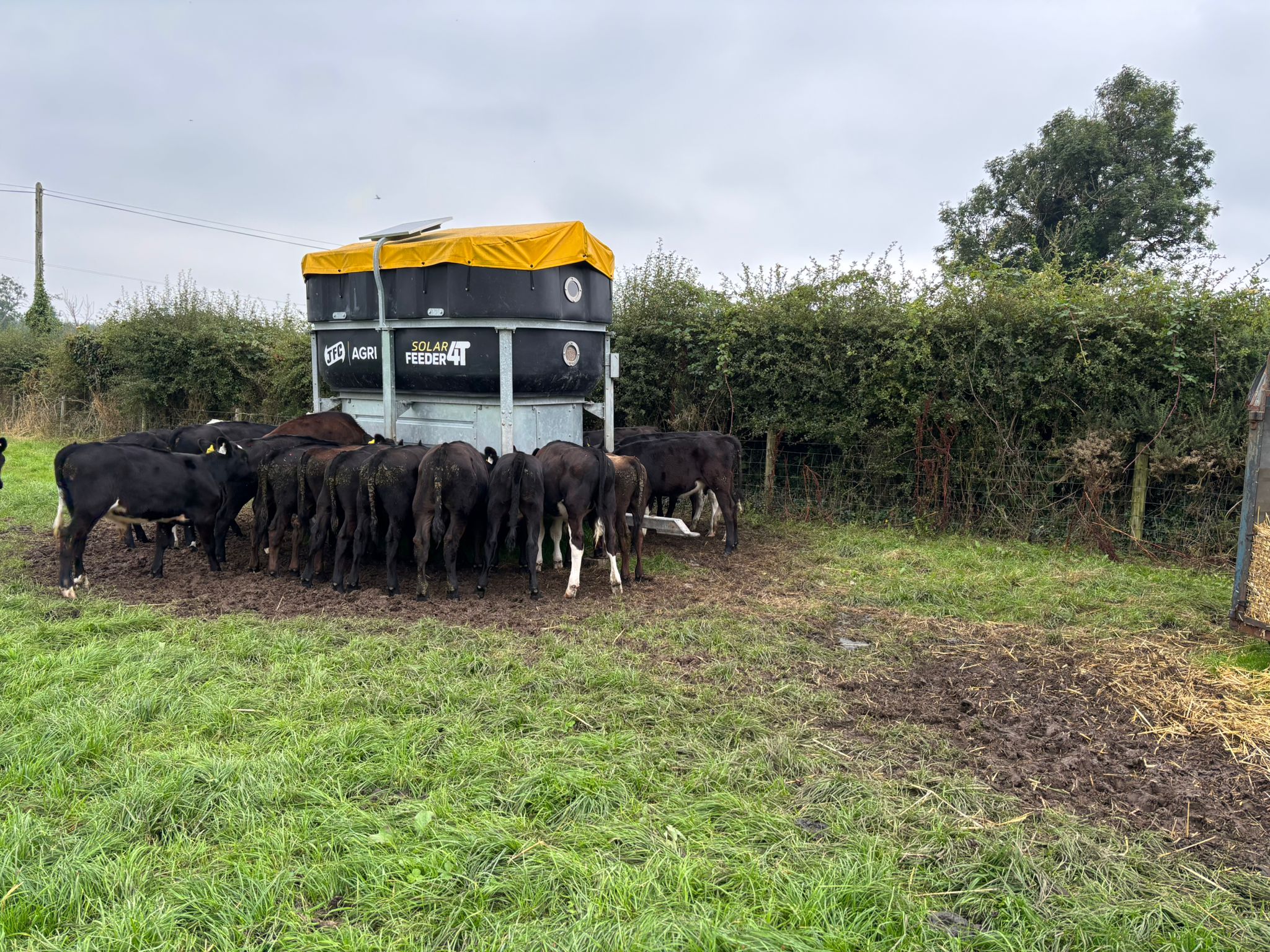
Managing a paddock system for dairy-beef calves at grass is more challenging in that every time calves are moved, troughs for concentrates and roughage feeders have to be moved also.
Pat Carthy’s farm in Co. Sligo is one of the ABP Monitor Farms .
Carthy has a home-made roughage feeder for keeping straw dry in the paddock and allowing for easy movement with a quad when out with stock at grass.
ABP Food Group’s Advantage Beef Programme farm liaison officer Sean Cassidy recently visited the farm to see how cattle have been performing.
Commenting on his home-made straw feeder, Carthy said: “It’s nothing fancy but it does the job.
“It’s a 40-year old livestock trailer that was bought new from Padraig O Hare in Kilmaine, Co. Mayo.
Carthy also has an automated meal feeder with the calves. This unit is solar powered and can be set to feed a specific amount of concentrates at certain times of the day
“I can lift a 6x3x3 straw bale into the trailer with the loader, cut the twine and bring it out to the calves in the paddock with the quad.
“I’m feeding round bales of straw in it at the moment but it’s not as straight-forward to get these in.”
Carthy also has an automated meal feeder with the calves. This unit is solar-powered and can be set to feed a specific amount of concentrates at certain times of the day.
He has two of these solar-powered meal feeders on the farm.
Cattle performance
Overall, Carthy is pleased with how cattle are looking and weighing, despite the prolonged dry spell of weather.
A batch of 18-month-old dairy-beef bullocks will be introduced to the other automatic meal feeder next week.
These will be built up towards their finishing diet before housing.
As well as this, the home-bred suckler calves will be introduced to the other feeder rather than ad-lib feeding these calves through a creep feeder.
All cattle have received a worm dose since the change in the weather.
Some of the home-bred cattle on the farm
The 2026-born dairy-beef calves purchased this year are doing well and are on a diet of on grass, ad-lib straw and 3kg of meal.
This year’s batch of dairy-beef calves are all March and April-born and are averaging 145kg.
Carthy is already in talks with the dairy farmer he bought the calves off this year to purchase more calves next spring as he is happy with the quality.
The calves are a mix of Angus, Hereford and Friesian bulls and were sourced through the Advantage Beef Programme farm liaison team.
The suckler cows and calves are performing well and weanlings will be allowed access to the automated meal feeder.
These will be left out as long as the weather and ground conditions allow.
All the slurry is spread and all silage is made on the farm for this year. A fodder budget will soon be done up and silage-quality will be tested to create a more accurate winter-feeding plan.
There is some lime to be applied to a few poorer-performing paddocks in the next few weeks.
Store lambs will also soon be bought in as normal to graze off any paddock with heavy grass covers over the winter.
Bullocks
Instead of finishing bulls this year, Carthy kept all his male cattle on as bullocks for ease of management.
These have not been weighed yet but he said they look to be performing well.
“The bullocks are easier managed but you’d miss having the bulls to sell for cashflow purposes.”
Carthy is considering keeping some of his male dairy-beef calves on to finish as bulls next year.
Cassidy reminded farmers that grass utilisation and growth rates begin to slow down into September and that this will have a knock-on effect on cattle performance if they are not supplemented.
The Advantage Beef Programme farm liaison officer advised farmers to assess cattle performance and make plans for the remainder of the year – in particular for finishing their forward-type cattle.
Related Stories
How many beef farmers signed up to AgNav ahead of factory pricing changes?
Watch: Meath beef farmers’ ‘mini’ solution fo
Source: Agriland. Summary reproduced for informational purposes.
Related
 Agriculture
Carlow farming family turns GAA medals into business success
The accumulation of lots of hurling and Gaelic football medals by her husband led Ana Coady to start a new business, Little and Loveable, on the family farm. She said: “My husband, John, is a full-time sheep and dry cattle farmer and the idea actually started
 Agriculture
Generators for farms: What support is available?
As the winter months approach, farmers may be considering purchasing a generator. Generators can be vital equipment for farms to have due to weather-related impacts on electricity supply. Farmers may be considering either a diesel generator or a power-take-off
 Agriculture
Rethinking dry-off on a high-performing Kerry herd
For Co. Kerry dairy farmer Maurice Harty, getting the most from a high-performing cow starts with making the most of the genetics in the herd. At Ballylongane Pedigree Holstein Friesians, the Harty family has been breeding pedigree cows since 1967, with the he
 Agriculture
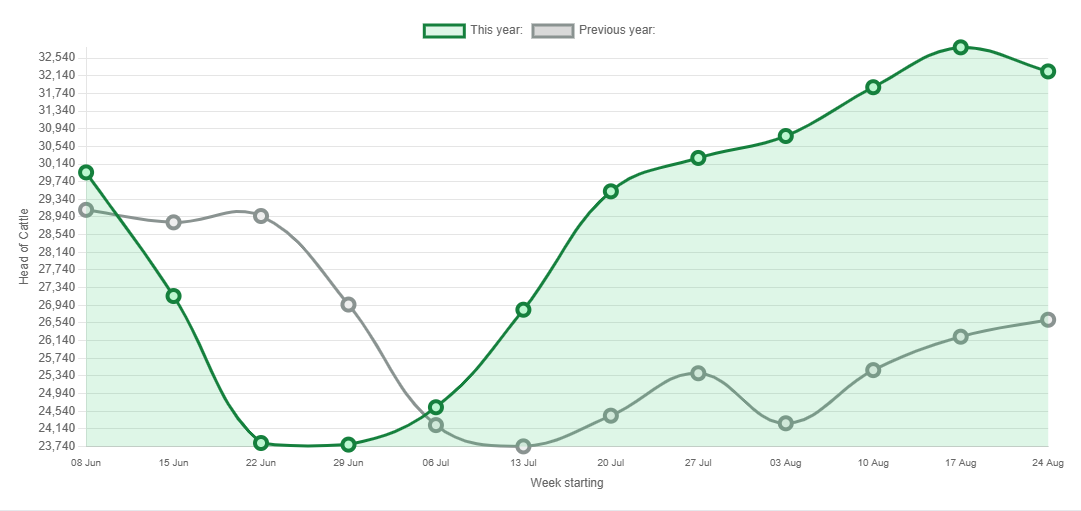
Weekly factory cattle supply up 5,600 head on same week last year
Weekly factory cattle supplies are up 5,600 head on the same week of last year, despite the overall kill this year being down by over 46,000 head or 4.2%. Last year saw unusually lower kill numbers throughout the second half of the year, whereas this year, kil
Never miss a headline
The biggest stories in business and finance, delivered to your inbox. Join thousands of readers — unsubscribe any time.