The end of the NBA’s American empire: how the 1986 draft changed basketball for ever

European players had long been dismissed as a risk by NBA teams. But two picks by the Portland Trail Blazers helped usher in the league’s international era
N BA commissioner David Stern walked to the podium at the Felt Forum in Madison Square Garden on 17 June 1986. “For the last pick of the first round of the NBA draft … America’s game ,” Stern said with a hint of a smile, “the Portland Trail Blazers select Arvydas Sabonis of the Soviet Union.”
Boos rained down from the crowd. TBS hosts Bob Neal and Larry Donald burst into laughter. One Portland journalist said if Sabonis ever played in the NBA he’d jump off the Broadway Bridge. (Sabonis had actually been drafted by the Atlanta Hawks the previous year but it was voided because he was not yet 21.) Portland doubled down two rounds later, selecting Dražen Petrović from another communist country, Yugoslavia.
Prior to 1986, international draft picks fell into two categories: foreign-born players who attended college in the US, and late-round flyers. (The draft was set at 10 rounds in 1974, then reduced to seven in 1985.) “At that time [the mid-1980s], I never saw an NBA scout in that period,” says Dan Peterson, an American coach, who worked in Italy. “Europeans were not yet on the radar. The NBA had no idea.”
NBA teams didn’t employ international scouts, relying instead on secondhand reports and grainy VHS tapes. “We didn’t have Synergy [scouting technology] like you do today. You didn’t have real films,” says Rick Sund, former general manager of the Dallas Mavericks. Teams initially turned to part-time scouts in the US or Europe for information.
Portland’s vice-president of basketball operations, Bucky Buckwalter, had been intrigued by European players for years. When he was an assistant coach at the University of Utah, his teams played exhibition games against European squads. In the NBA, he leaned on his former college teammate, George Fisher, who was coaching in France, for information about European players.
Buckwalter and Fisher’s conversations centered around Sabonis. Buckwalter first heard about the Lithuanian center during a 12-game exhibition tour of the US by the Soviet Union’s national team in 1982, when they faced college squads. Word spread fast about the 7ft 3in, 17-year-old who outscored the defending two-time National Player of the Year, Ralph Sampson.
Sabonis possessed a devastating combination of power and finesse. The tallest man on the court ran like a gazelle, passed like Bill Walton and could shoot threes. “You know, I played against Sabonis basically since I was 16,” NBA All-Star Detlef Schrempf said decades later. “I told everyone all the time that if Sabonis was in the NBA he’d be the best player possibly ever. Guys are ‘Pff, come on.’ He’d be the best center in the league by far.”
Fisher also mentioned Petrović, a Yugoslavian guard whose virtuoso performances were drawing comparisons to Pete Maravich. “The Mozart of Basketball” averaged more than 40 points per game in the Yugoslavian league and led Cibona to the European Cup title in 1986, defeating Sabonis’s Zalgiris squad in the finals. During that tournament, he scorched Olimpia Milano with 47 points on 19-of-23 shooting and 25 assists.
There were impediments to signing international players at the time though. Europeans were discouraged from joining the NBA by the International Basketball Federation’s (Fiba) amateurism requirement. NBA players were deemed professionals and couldn’t represent their country in international competitions, even though athletes who played professionally in Europe were considered amateurs.
The communist countries exerted additional control. The Soviet Union forbade players from signing abroad, leaving defection as the only option, which jeopardized the freedom and safety of loved ones left behind. Yugoslavia prohibited its players from playing in other countries until they were 28.
NBA executives were skeptical about whether Europeans could compete in the league and concerned about their ability to assimilate. The commonly held belief was that European players weren’t as tough or skilled as their American counterparts. Executives were reluctant to risk a high draft pick, and possibly their jobs, on European talent.
The Blazers were mired in mediocrity during the mid-80s and didn’t have a high pick in the 1986 draft. Buckwalter believed Europeans could propel them into contention. “We picked the best big man and best guard in Europe,” he says of Sabonis and Petrović. The question was whether Portland could sign them?
Sabonis and Petrović faced each other at the Fiba Championship in Madrid weeks after the draft. Sabonis won out as the Soviet Union beat Yugoslavia in an epic comeback overtime victory before losing to the US in the finals. Buckwalter stayed in the same hotel as the players, though approaching Sabonis wasn’t easy. The Lithuanian was being watched. Members of the KGB accompanied athletes when they traveled abroad.
Buckwalter had a Lithuanian friend ask Sabonis to meet him. Sabonis agreed and snuck out of his room in the middle of the night to join Buckwalter in a hotel room at 3am. Buckwalter asked Sabonis if he wanted to come to the NBA. Sabonis said he did, but was unwilling to defect because of the possible ramifications for his family.
Portland attempted to use owner Larry Weinberg’s connections in the US state department to convince the Soviets to allow Sabonis to join the NBA. A congressman, senator, and two secretaries of state operated as emissaries on the Blazers’ behalf. Portland offered the Soviet bureaucrats millions of dollars to let Sabonis go, to no avail. The Soviets wanted Sabonis to compete in the 1988 Olympics and wouldn’t allow him to lose eligibility by playing in the NBA.
Buckwalter also met with Petrović in Madrid to gauge his interest in signing with Portland. He was leery about making the jump across the pond, and wasn’t ready to forfeit his international eligibility.
Buckwalter was undeterred. He hired Kenny Grant, an American coaching in France, to keep tabs on Petrović. In the spring of 1988, the Blazers paid for Sabonis to come to Portland to rehabilitate his torn achilles tendon, just in time for him to lead the Soviets past the US in the Olympics that summer before beating Drazen’s Yugoslavia for gold.
Meanwhile, the winds of change swept through international basketball. At the urging of Fiba’s secretary general, Borislav Stanković, the organization voted in the spring of 1989 to allow professionals to play in international competitions, paving the way for the US Dream Team at the 1992 Olympics. (The US voted against the rule change.)
The new policy opened the door for five Europeans to sign with NBA teams for the 1989-90 season. Petrović was one of them. After languishing on the Blazers’ bench for a season-and-a-half, Drazen blossomed when he was traded to the New Jersey Nets in January 1991. He averaged 22.3 points per game during the 1992-93 season and was named to the All-NBA Third Team. Sadly, Petrović died in a car crash in Germany in June 1993. He was 28.
The USSR had also changed since the 1986 draft. Mikhail Gorbachev’s glasnost policy opened up society. Soviets played exhibition games against the Atlanta Hawks in the US in 1987, and the Hawks reciprocated with a groundbreaking tour of the Soviet Union the following year. In 1989, the USSR allowed players to leave the country. Buckwalter negotiated with Sabonis’s agent, though the player chose to sign with Valladolid in Spain. He was still working his way back after two achilles tears, and the European schedule, which featured one game a week, was more suitable to his ailing body.
Sabonis was finally ready for the NBA in 1995 after a successful spell with Real Madrid. The Blazers front office asked team doctor Robert Cook to examine an MRI of Sabonis’s achilles. Cook said Sabonis “could qualify for a handicapped parking spot right now”.
At the age of 30, Sabonis was no longer the force he once was. Injuries had reduced his mobility. He averaged 14.5 points and 8.1 rebounds in just 23.8 minutes per game during the 1995-96 season. Extrapolated over 36 minutes, that’s 22 points and 12.2 rebounds, All-Star numbers. Sabonis played seven seasons in Portland. As for the journalist who said he’d jump off the Broadway Bridge if Sabonis ever played in the NBA, the 92-year-old Buckwalter is still waiting.
Source: The Guardian. Summary reproduced for informational purposes.
Related
 Basketball
NBA Summer League takeaways: an outstanding top four, a Warriors gem and a Cavaliers steal
The midsummer party in Vegas is a showcase for the next wave of NBA talent. Our correspondent in the desert empties her notebook The hype heading into this year’s draft was tremendous, and through the small sample size of 10 or so days in the Las Vegas summer
 Basketball
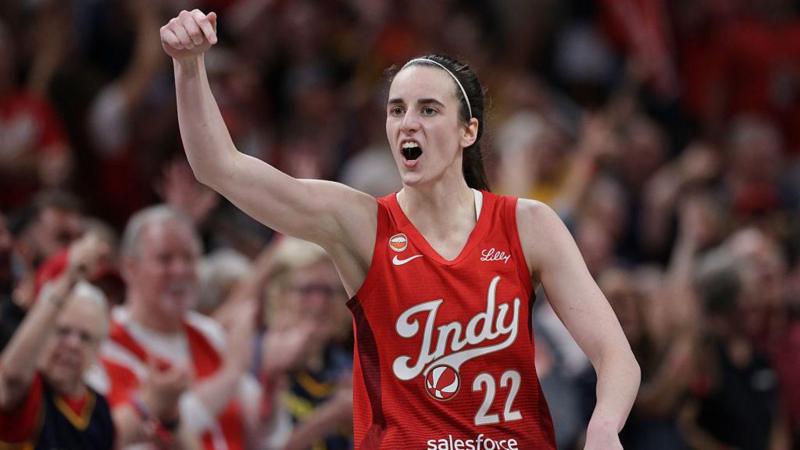
Clark makes WNBA history with 45 points and 10 assists
Caitlin Clark becomes the first player in WNBA history to produce over 40 points and 10 assists as Indiana Fever defeat Seattle Storm.
 Basketball
Clark 'a political football' says NBA chief Silver
NBA commissioner Adam Silver believes the debate around the treatment of Indiana Fever star Caitlin Clark is "not largely about officiating".
 Basketball
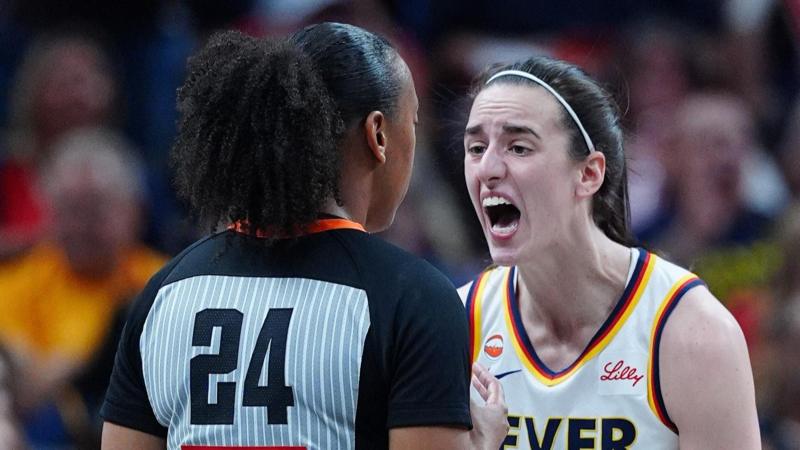
WNBA star Clark yells in referee's face
Indiana Fever guard Caitlin Clark shouts at referee Gerda Gatling after decisions go against her team in a defeat by the Golden State Valkyries.
Never miss a headline
The biggest gaming and sports stories, in your inbox. Unsubscribe any time.