UK borrows less than expected in June but public finances remain a challenge
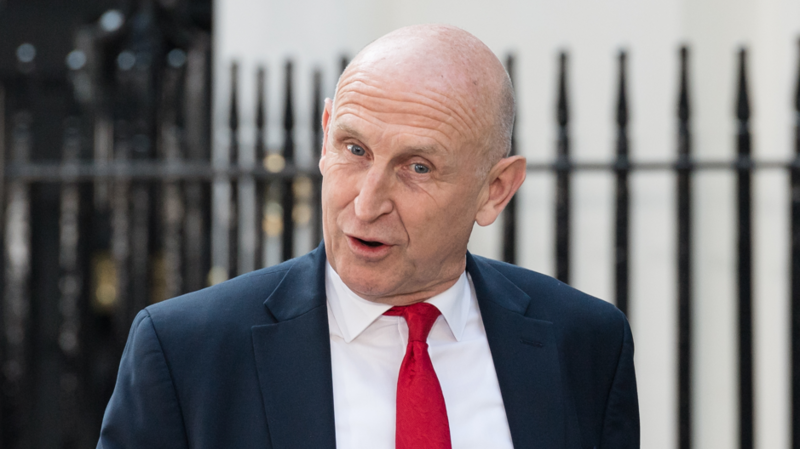
The government borrowed slightly less than expected in June, according to figures published as new Prime Minister Andy Burnham began setting out measures to cut living costs for households.
Borrowing - the difference between spending and income from taxes - was £16bn, about £7.9bn lower than a year earlier, although analysts said challenges remained over the UK's public finances.
Other data showed the unemployment rate was unchanged, with the Office for National Statistics (ONS) saying the labour market was "relatively steady".
However, while the borrowing figure was less than forecast, the ONS said total debt was high by historical standards and close to the annual value of the UK economy.
Borrowing for June was slightly below the £16.3bn that had been predicted by the government's official forecaster, the Office for Budget Responsibility (OBR).
Ruth Gregory, deputy chief UK economist at Capital Economics, said June's figure was "a rare piece of good news" for the new prime minister and his new Chancellor, John Healey.
However, she added: "Overall, there's no escaping the fact that the public finances are fragile and that there is limited scope for extra borrowing."
So far in the current financial year, borrowing has reached a total of £57.6bn, according to the Office for National Statistics (ONS). While this is down £3.7bn from the same period last year, it is £2.7bn above the OBR's forecast.
James Smith, chief UK economist at ING, told the BBC's Today programme the fact that borrowing was still running ahead of the OBR's projections was "a reminder of the challenges that the new chancellor and the new prime minister face".
He added they would face a "difficult picture" at the autumn Budget, with "lots of tough choices to be made".
Burnham and Healey have both pledged to stick to former chancellor Rachel Reeves' fiscal rules on spending and borrowing, although the new prime minister said on Monday he would use "any flexibility within them" to help with policy changes.
Shortly after Burnham's comments were made public, the yield on 10-year government bonds - effectively the interest rate charged to the UK government for a 10-year loan - rose above 5%.
The yield hit 5.03% late on Monday afternoon. However, when trading began on Tuesday the rate slipped back slightly to 5.01%.
In a statement released on Monday, Healey said "fiscal credibility is the bedrock for economic stability and for national security".
Shadow chancellor Sir Mel Stride said Labour had "maxed out the nation's credit card and sent borrowing soaring".
"If Andy Burnham and John Healey are really serious about the future of our economy then they must get borrowing under control," he said.
The new leadership's first major policy announcement was to cut VAT on household electricity bills from 5% to zero from the beginning of October.
Ministers said it would be funded by savings from the cancellation of the digital ID programme, but Labour's Darren Jones, who was sacked as chief secretary to the prime minister on Monday, accused the government of announcing an unfunded tax cut.
VAT to be cut from household electricity bills in October
Burnham promises help with your money. How could it affect you?
How much money does the UK government borrow, and why does it matter?
June's borrowing figure was helped by higher revenues from income tax and VAT, while interest payments on inflation-linked debt fell.
The government paid £11.8bn in debt interest payments in June, which was nearly a third lower than the same point last year.
However, it was still the fourth highest total for June on record, the ONS said.
Public sector net debt currently stands at nearly £3 trillion, which is almost as much as the value of all the goods and services produced in the UK in a year, known as the gross domestic product, or GDP.
However, in the October 2024 Budget, Reeves changed the definition of debt that the government would use in its fiscal rules to a broader measure called public sector net financial liabilities (PSNFL).
Under this measure, total debt was £2.7tn at the end of June 2026, the equivalent of 84.5% of GDP.
Meanwhile, the latest survey of the labour market showed the unemployment rate remained unchanged at 4.9%.
Growth in regular earnings - which excludes bonuses - remained unchanged, rising at an annual pace of 3.4% in the March to May period.
However, the ONS noted that regular wage growth in the private sector fell below 3% for the first time since 2020.
Yael Selfin, chief economist at KPMG, said the "subdued" wage growth made it more likely that the Bank of England would keep interest rates on hold at 3.75% when it meets next week.
"Weak hiring activity is continuing to weigh on workers' bargaining power, limiting upward pressure on wages," she added.
"Workers are also set to see a renewed squeeze on living standards during the second half of the year as higher energy costs feed through to household bills."
Source: BBC News. Summary reproduced for informational purposes.
Related
 Economy
Most Americans view rising living costs as biggest barrier to a better life, survey finds
When asked to detail what would make a better life in three to five years, 60% of US adults said greater financial security Americans may seem increasingly divided on beliefs and values, but in a new survey of more than 30,000 adults from across the country sp
 Economy
UK manufacturing growth picks up as Trump tariff chaos eases
Factories in upbeat mood despite fears over economic impact of US war on Iran, poll finds UK manufacturers ramped up production last month for the fourth consecutive month and at the fastest pace in almost two years, according to a leading survey of the indust
 Economy
Yen hits three-month high after Trump helps prop up currency
US and Japanese governments confirm they carried out a rare joint intervention late last week Why has Trump stepped in to prop up Japan’s currency? Business live – latest updates The yen has hit its highest level in three months after Japan and the US launched
 Economy
Trump’s hypocritical new tariffs are a chance for the world to fight back | Joseph Stiglitz
The president’s pretext of stopping forced labour is only a ruse – he is trying to grab a share of global trade for the US Here he goes again. The US President, Donald Trump, is increasing and decreasing tariffs willy-nilly, violating international agreements
Never miss a headline
The biggest stories in business and finance, delivered to your inbox. Join thousands of readers — unsubscribe any time.