US interest rates held steady and economy grows - what it means for you
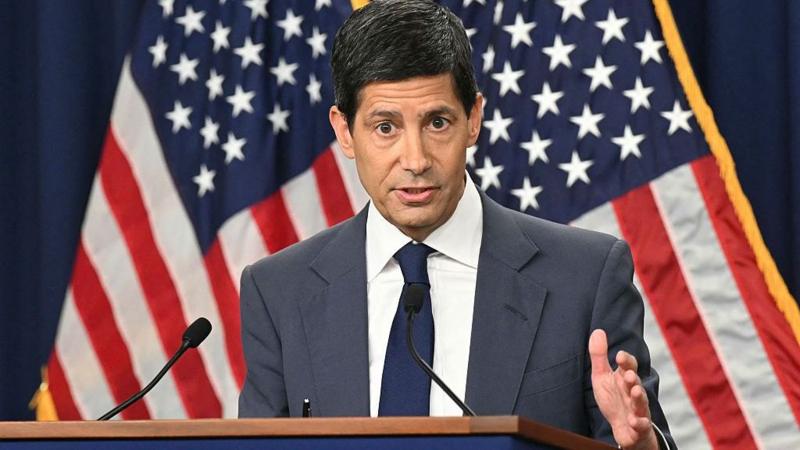
The US Federal Reserve has held interest rates steady at 3.75% - 4%.
The decision comes within a week of the midterm elections and after the central bank raised interest rates for the first time in three years at its September meeting.
"The overwhelming consensus, the overwhelming judgement, is that what we've done in this monetary medicine is starting to work some," Fed Chair Kevin Warsh said, referring to September's interest rate rise.
Figures published after the Fed's announcement showed the US economy growing at a stronger pace than expected, with inflation running above the Fed's target.
An interest rate tells people and businesses how much it costs to borrow money – such as with credit cards, mortgages, or business loans – but also what return they get for saving cash.
The Fed influences interest rates in the US through its target range for the federal funds rate, which is the interest rate used by commercial banks for overnight borrowing.
In its decision to hold rates steady this month, the Fed said that while inflation remains high, it wanted to gather more information before making another decision to change rates.
The Fed also noted that while there was uncertainty, the US economy remained resilient.
Warsh acknowledged that inflation remained too high, but noted that there were other signs - such as tightening credit conditions - that the economy was moving in the right direction.
There is plenty more economic data to come between now and the committee's next meeting, the Fed chair added, which should paint a more detailed picture of the state of the economy.
At that point, Warsh said, "we'll be, I think, better positioned to determine the right policy decision and the stance of policy."
While last month the committee signalled there could be one more rate rise this year, Warsh would not be drawn out on where he thinks they will go in six weeks' time.
"A lot of things can happen, so I'm not going to be able to share with you my musings."
The decision to hold rates steady was not unanimous.
While 10 of the 12 committee members voted to keep rates unchanged, Governor Lisa Cook and Cleveland Fed President Beth Hammack voted to increase rates to 4%-4.25%, from its current 3.75%-4%.
The bank's next meeting will be held over 8-9 December.
Warsh said things are moving in the right direction, while the US economy is performing very strongly.
The US economy grew by 3.4% on an annualised basis in the three months to September, stronger than analysts had expected.
That strong growth was driven by an acceleration in investment, and strong consumer spending.
While there was an annualised increase in personal spending of 3.8%, the annualised increase in private investment was a huge 19.4% which analysts say was largely due to investment in artificial intelligence.
Inflation is also above the Fed's target range.
Prices increased by 3.7% in the year to September, driven higher by fuel and energy prices which have surged off the back of the war in Iran.
The Fed uses interest rate changes to try to keep inflation – the rate at which prices change – at 2% a year and keep the job market stable.
When inflation is too high, the Fed tends to raise interest rates.
This tends to mean higher rates from banks and other lenders, which in turn affects spending and saving decisions.
For example, someone refinancing their mortgage or buying a property for the first time could face higher mortgage rates. It could also mean higher interest rates on credit cards or car loans. However, it means higher interest rates on savings as well.
This encourages people and businesses to save more, spend less money, and make less investments. It also encourages companies to hire less people or slow the pace of pay rises.
All of this tends to reduce demand and slow inflation.
When inflation is low or if the Fed believes the economy needs a boost, it cut rates.
The idea is that this will have the opposite affect, with banks dropping rates leading to more spending and less saving from people and businesses.
Leaving the rates unchanged means rates on things like new mortgages or business loans are also less likely to change. It also means interest rates on cash savings are unlikely to rise.
US interest rates have historically moved around quite a bit.
The last time Fed rates were as high as they have been recently was in the lead up to and during the start of the 2008 global financial crisis.
The Fed then dropped rates to historic lows to encourage spending and job creation during the economic slump and kept them at those lows for several years.
They picked up again ahead of the pandemic before dropping to as low as 0%-0.25% during the pandemic. They then rose to highs of 5.25%-5% from the middle of 2023 to August 2024 as inflation jumped.
They had been falling steadily since then, until rates were raised last month.
US inflation rises more than expected - here's what is happening with prices
Donald Trump's biggest economic problem looks strangely familiar
Source: BBC News. Summary reproduced for informational purposes.
Related
 Economy
Bank of England raises interest rates to 4%, the first increase for more than three years
Base rate increases from 3.75%, and Bank governor signals another rise in near future to combat rising inflation Analysis: Interest rate rise in midst of cost of living crisis will leave many incredulous Business live – latest updates The Bank of England has r
 Economy
Rural voters were feeling left behind before the midterms, poll shows
Polling done for the Guardian shows plummeting support from a former key constituency of Donald Trump’s base Polling conducted by the Harris Poll for the Guardian before the election shows just how angry voters were and points to one key reason Republicans los
 Economy
Thursday briefing: ‘A dignified life for all must be the north star’: economist Isabella Weber answers your questions
In today’s newsletter: From the cost of living to the AI bubble and the fight against fascism, Weber answers Guardian readers’ questions on how to build a fairer economy and world Good morning. As stateside celebrations die down, the Democratic party will be f
 Economy
The RBA says there is ‘excess demand’ in the economy. Households doing it tough might disagree | Greg Jericho
The problem with inflation driven by factors such as wars and supply side shocks is that interest rate rises don’t do much Get our daily political email , free app or daily news podcast On Tuesday this week came the biggest news regarding inflation. No, not th
Never miss a headline
The biggest stories in business and finance, delivered to your inbox. Join thousands of readers — unsubscribe any time.