Why Balkan operators are uniting in the fight against the black market
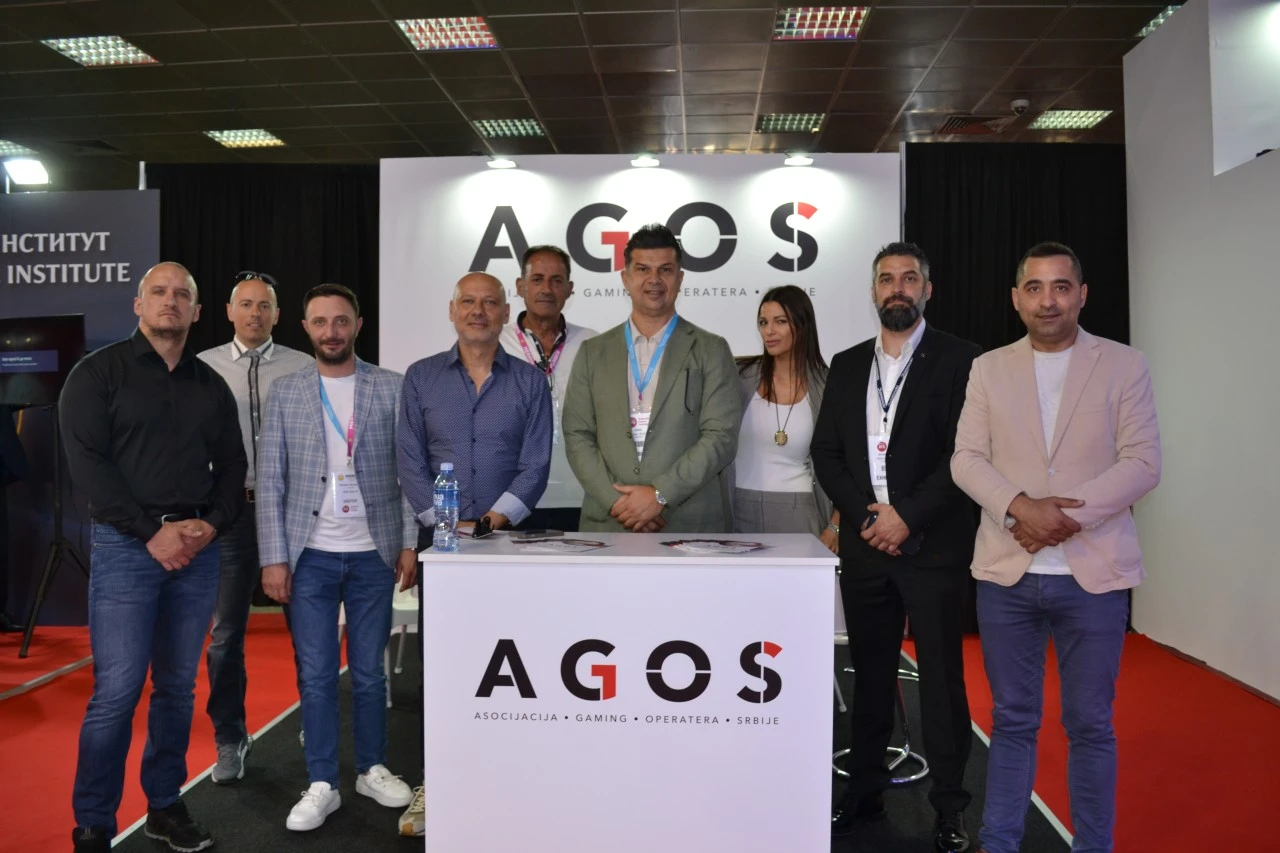
Across southeastern Europe, the pressure on legal gambling operators is mounting. From Romania to Croatia, illegal operators are expanding across borders and finding new ways to attract customers, while legal operators feel stifled by rising costs and regulatory pressures. Squeezed on both sides, operators have opted to form a unified front.
In March this year, seven countries came together to found the Balkan Gaming Federation (BGF) . The initiative unites trade associations representing operators and suppliers from across the Western Balkans, including Serbia, Bulgaria, Croatia, Romania, Montenegro, Bosnia and Herzegovina and North Macedonia. Its founders cite two key aims: fighting the illegal market and promoting proportionate regulation in the region. The two, they say, are closely interconnected.
Most crucially, the federation hopes to give a voice to an industry that feels increasingly under siege in the Balkans, buffeted by regulatory headwinds, an ever-higher tax burden and an increasingly bullish black market.
Building dialogue
A few months in, the work has already started. After signing its Memorandum of Cooperation in Belgrade , BGF has opted to register its seat in Croatia and is set to elect its first president this autumn.
The federation is also organising a major roundtable of Balkan regulators, bringing together leading companies, independent experts and government representatives in an unprecedented exchange of ideas. The goal is to foster dialogue between the regulators and the industry on topics like regulation and the black market, creating an atmosphere of collaboration rather than confrontation.
“Licensed operators should not be viewed as part of the problem – they should be recognised as part of the solution,” explains Miloš Lalević, vice president of GPIS Montenegro, former deputy minister of sports and culture, and member of Montenegro’s negotiation team for European integration.
“They are the entities that invest in compliance, responsible gambling programmes, consumer protection, technological innovation and anti-money laundering systems. If governments want to effectively combat illegal gambling, they need strong and competitive regulated markets.”
Regulatory burdens
Looking at the story of gaming in the Balkans over the past few years, however, it is easy to see why the industry feels it has been treated as “part of the problem”. Once seen as the affordable gateway into European gaming, the region has seen a spate of tough regulatory measures introduced in recent years, combined with spiralling costs.
According to Lalević, operators have often been the victim of “outdated perceptions”. At the same time, regulators fail to consider how much they contribute economically. In Romania, where the situation is arguably the most extreme, the land-based slots sector is collapsing amid new local authorisation laws . The new rules, which follow recent tax hikes and a ban on slots in small towns , effectively put the industry at the mercy of local councils.
In Bulgaria, meanwhile, operators have seen a similar ban on gambling in small towns. There has also been a near-total ban on advertising and an extension of the self-exclusion scheme – all within the past few years.
In Croatia, where the federation has its seat, a similar regulatory overhaul is under way, implementing tough rules on advertising, player identification and self-exclusion. On top of this, the industry is facing steep tax hikes and increases in licensing fees.
“My concern is that, in many jurisdictions, there is still an insufficient understanding of the practical consequences that certain regulatory measures can produce,” says Lalević. “When regulation becomes excessively restrictive, the outcome is often the opposite of what policymakers intend.
“Players do not disappear from the market; they simply migrate to unlicensed operators that are beyond the reach of national regulators, tax authorities and consumer prot
Source: iGaming Business. Summary reproduced for informational purposes.
Related
 Regulation
New Zealand opens EOI process for iGaming licences as liberalisation process gathers steam
This is the first stage of a three-part process, beginning with an EOI, followed by an auction in September and concluding with an application submissions deadline of October.
 Regulation
ANJ fines unnamed operator €500,000 for not identifying high-risk players
The operator hit back at the regulator's investigation, arguing that French law lacks a statutory definition of "pathological" gambling.
 Regulation
DCMS extends unlicensed gambling sponsorship ban to include non-sport deals
White-label agreements appear to be safe from the ban, however, as a second consultation gets under way.
 Regulation
Greece saw a modest revenue rise with land-based dominance in 2025, EEEP reports
The increase was driven by continued growth in the online gambling sector.
Never miss a headline
The biggest gaming and sports stories, in your inbox. Unsubscribe any time.