Young adults in north dying at higher rates, study finds
Younger adults living in the north of England are 42% more likely to die than their counterparts in the South, according to new research.
A study by academics in Manchester and Liverpool found people in the North aged 25 to 49 faced a significantly higher risk of death than people of the same age living in southern England.
Researchers said deprivation was a major factor behind the gap and called for urgent action to tackle inequalities.
The Department of Health and Social Care said it was determined to reduce health inequalities and close the divide.
The research, by the University of Manchester, the University of Liverpool and Health Equity North, analysed deaths between 1981 and 2024.
It found that while death rates fell overall, the gap between younger adults in the north and south more than tripled. Overall, people aged 25 to 49 in the north had a 42% higher death rate, compared with 13% in 1981.
Although the study did not examine causes of death, previous research by the same group found strong links with deprivation.
Professor Iain Buchan, from the University of Liverpool, said the figures meant more than 3,000 people a year in northern England were dying before their time.
"I find it very shocking on a public health level and an overall country wellbeing level," he said.
For those dealing with the health impacts of deprivation every day, the findings come as little surprise.
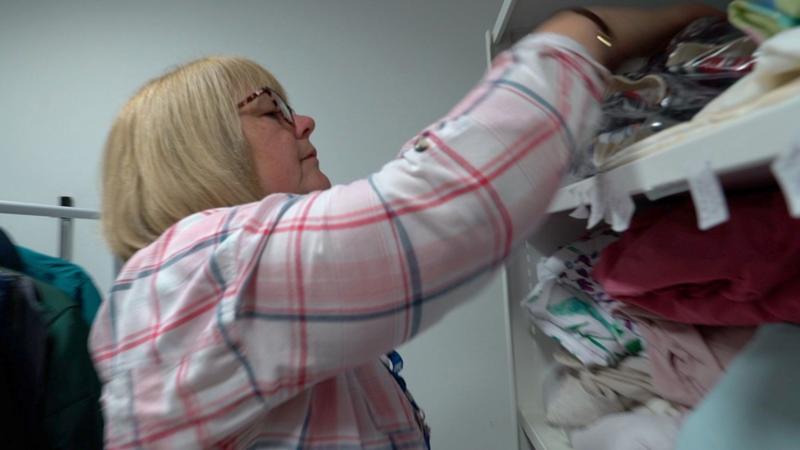
Care worker Lisa Chattington, from Hollinwood Medical Practice in Oldham, helps patients struggling financially or facing other challenges that can affect their health.
"Poverty is the root of everything. If you have no money, you can't live in a warm house. You can't eat the right food," she said.
She said some patients even struggled to afford the bus fare to attend appointments.
The practice provides clothes, bedding and toiletries to people in need and refers patients to a nearby food bank.
Hollinwood Medical Practice is one of a network of surgeries run by Hope Citadel in Greater Manchester.
It was set up by Dr Laura Neilson to link medical care with social support.
"So much of our health is about the circumstances that we live in," she said.
Dr Neilson said patients in deprived areas were developing serious illnesses at younger ages.
"People present with cancer at a much younger age than we would see if they were living in better conditions.
"We'll see heart disease younger and diabetes at a much younger age and in a much higher proportion of the population."
Prof Buchan said poor health was also holding back economic growth.
"If people in the north were as healthy as the rest of England, the economy would be around £18bn a year bigger," he said.
"So this isn't just charity for the north, it's the health and wealth of the whole country at stake."
One person who has benefited from the support offered by the practice is Lindsay Cooke.
She has a chronic condition affecting her spine and legs which means she uses crutches.
For years care worker Lisa Chattington helped her get the support and equipment she needed to keep her job.
When she recently found herself unable to continue, the surgery helped her get a blue badge and regular Personal Independence Payments.
Lindsay said the money was allowing her to eat healthily.
"I hate to think what it would be like without the help I've received from this surgery and from Lisa," she said.
"I think I'd be relying on food banks and vouchers."
The study's authors said bold action was needed by the government and other organisations to reduce health inequalities.
"This won't be fixed by a single policy in a year or two years. It will probably take decades. The scale of the problem is enormous," Prof Buchan said
In a statement, the Department of Health and Social Care said: "Someone's postcode should never dictate how long they live, and this government is determined to tackle the stark inequalities that still exist in our country.
"We're already taking action, including delivering new Neighbourhood Health Centres in the areas that need them most."
Back in Oldham, Dr Neilson said there was no time to lose.
"These people have got years and years to live.
"They've got families and communities that need them and so we need them to thrive."
Tell us which stories we should cover in the North West
Babies in Midlands and North 'more likely to die around birth'
Source: BBC News. Summary reproduced for informational purposes.
Related
 Money
Streeting delays defence jobs plan for young people after union pushback
UK defence secretary had been due to unveil proposals on Thursday until concerns were raised at 11th hour Wes Streeting has been forced to delay the publication of a plan to get more young people into defence industry jobs after pushback from trade unions, the
 Money
Why did Revolut stop working today?
Google Cloud says services are recovering after a "power event" at its UK cloud site caused an outage affecting UK banks, businesses and the courts.
 Money
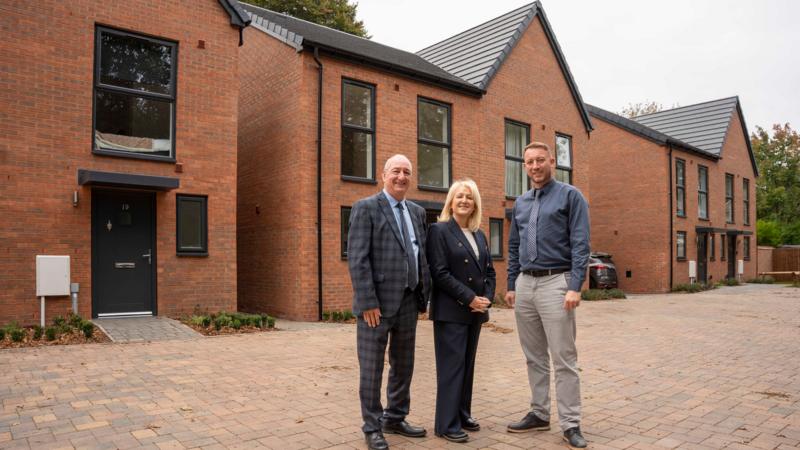
Former tennis club site serves up new council homes
Residents are due to move into the 11 solar-powered houses on Villiers Avenue in Bilston.
 Money
Healey to reject calls to raise capital gains tax in budget
Cabinet colleagues have previously called for an increase but chancellor feels it might ultimately cost the Treasury John Healey will not raise capital gains tax in next week’s budget, despite previous calls to do so from cabinet colleagues including Louise Ha
Never miss a headline
The biggest stories in business and finance, delivered to your inbox. Join thousands of readers — unsubscribe any time.