Dairy focus: Lisavaird’s milk quality award-winning farm
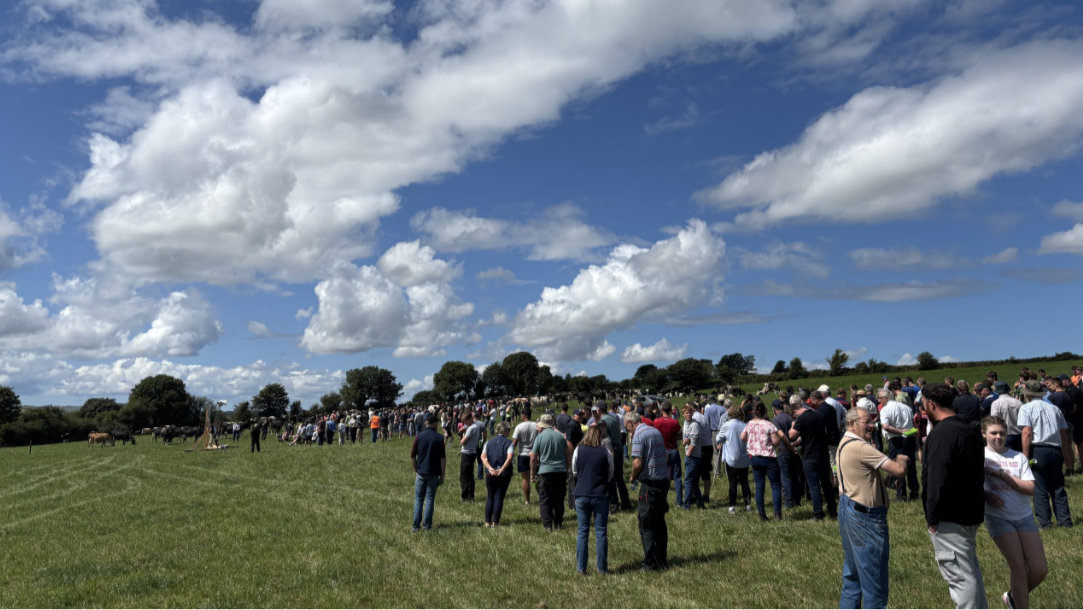
The Buttimer family of Lyre, Clonakilty, Co. Cork welcomed massive crowds to their farm for Carbery’s Milk Quality and Sustainability farm walk.
The event was held in conjunction with Lisavaird co-op and Teagasc.
Darren Buttimer is milking 245 cows alongside his wife Caroline and their children, Mathew, Rachel, Leah, and Hannah.
In November 2025, the family farm was announced as the overall winners of the 2025 Carbery Milk Quality and Sustainability Awards.
Fast forward eight months, the family has been announced as a finalist in the 2026 NDC and Kerrygold Quality Milk Awards.
Production
The farm, which the Buttimer family has been milking on since the early 1960s, is now comprised of just under 140ha, more than 75ha of which is in the milking platform.
In 2025, the herd produced an average 6,398L of milk at 4.47% fat and 3.74% protein, equating to 540kg of milk solids (MS) from 1.05t of meal.
This brought the farm slightly into the high nitrates band last year, with Darren stating he would rather go back into the middle band than pushing on through the third.
Some of the crowd at Carbery’s recent Milk Quality and Sustainability farm walk on the Buttimer’s farm
Currently, they are producing 21.8L at 4.41% fat and 3.72% protein, equating to 1.83kg/MS off 4.5kg of ration alongside silage, given the current drought conditions.
The mainly Friesian herd has an average Economic Breeding Index (EBI) of €138, with Darren noting he would be more focused on functionality and production rather than the EBI figure itself.
He grew 12t/ha of grass last year, but with the poor spring and the hard drought, grass production is back this year as is milk production.
The Buttimers are rearing 61 yearling heifers and 71 weanling heifers on out-blocks.
Milk quality
Winning a Milk Quality and Sustainability Award is no longer just about the milk quality, with farms now being evaluated on all areas of dairy farming.
That been said, the Buttimer family milk quality data speaks for itself.
In 2024, the year they were judged on, the Buttimers averaged 4.45% fat and 3.72% protein.
This was all while maintaining an average somatic cell count (SCC) level of 93,000cells/ml, a total bacterial count (TBC) of 10,000 CFU/ml, and a thermoduric level of 310 CFU/ml, which has since dropped back to 95 CFU/ml.
To achieve these figures, the Buttimers put an emphasis on getting the basics right.
They milk the herd through a 16 unit double-up Alfa Laval parlour.
It does not have a dump line or cluster flush, which may be expected on such a high-quality producing farm.
It does however have automatic cluster removers (ACRs).
The 16 unit double-up Alfa Laval parlour
Cows are not pre-sprayed in the parlour, they are only washed and drip-dried if the teats are physically dirty. Teats are thoroughly post-sprayed.
The parlour receives a peracetic acid wash twice each day, one hot wash each day, and one descale each week through the auto-washer.
It is also serviced once a year while liners are changed twice a year.
The Buttimers milk record five times a year, as well as carrying out culture and sensitivity testing twice a year, once in or around St. Patrick’s Day, and the second time before drying off.
This allows them to to be more accurate with selective dry cow therapy, with 66% of the herd below the 100,000 cells/ml SCC criteria rate and only receiving dry cow tubes.
The Buttimers herd produced 540kg of milk solids in 2025
In the lead up to dry-off, batches of 16 or 32 are picked out at the start of the week and milked once a day until the end of the week, where they will be dried off an hour after the last milking.
Matthew Buttimer said they make a real effort to feed “good strong dry silage” in the lead-up to dry off, saying wet silage loosens out their dung and presents a higher risk of infection as tails swing, even when clipped.
When it comes to mastitis during the year, Buttimer praised their farm manager, Richard Roycroft, for spottin
Source: Agriland. Summary reproduced for informational purposes.
Related
 Agriculture
Why silage testing is a smart investment
When farmers are drawing up fodder budgets this month, it may be well worth their while to silage test the crop already in the yard. Despite the drought impacting fertiliser applications, a lot of farms will be hoping to get another cut in at the end of the mo
 Agriculture
Country diary: Rare Wensleydale sheep have their day in the sun | Andrea Meanwell
Garstang, Lancashire: With fedora and broken shepherd’s crook, I was a judge at an agricultural show, inspecting the mouths and fleeces of some fantastic breeds As I walked across the show field in the sunshine on my way to the secretary’s tent, my shepherd’s
 Agriculture
After decades of decline, New Zealand’s wool industry is making a comeback
Forty years ago there were more than 22 sheep to every New Zealander, but wool prices and production declined with the uptake of synthetic alternatives John Hargreaves’ family has farmed sheep and beef in Kaiwaka, north of Auckland, for generations. In the 196
 Agriculture
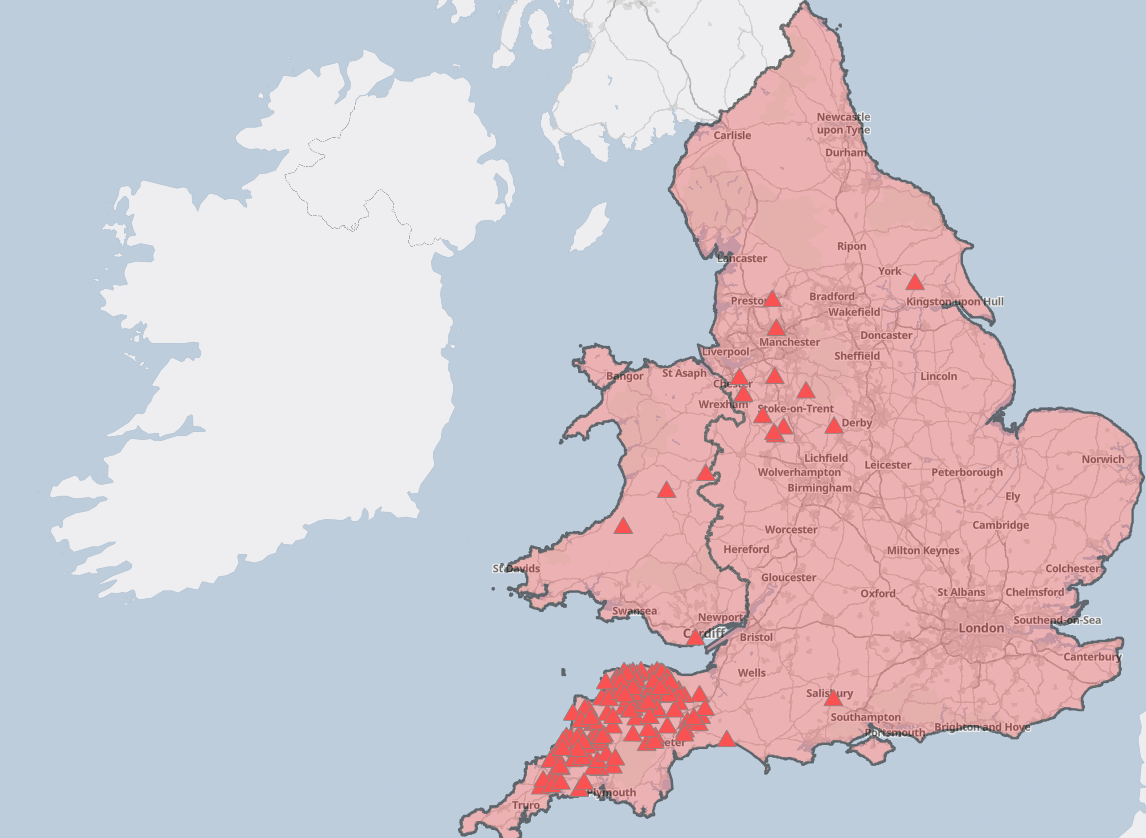
Are bluetongue-infected midges on the way from the UK?
If weather conditions allow the migration of infected midges from the UK across the Irish Sea to Ireland this autumn, we could see increased cases of bluetongue here. According to the National Disease Control Centre (NDCC) in Ireland, there has been a signific
Never miss a headline
The biggest stories in business and finance, delivered to your inbox. Join thousands of readers — unsubscribe any time.