‘Everyone said this farm would never make money. They were wrong’
James Rebanks refused to accept that a small family farm could not be profitable. Here’s how he proved it – and the tool that helped him get there.
There is a quiet assumption that follows small family farms around. That they are passion projects. That the numbers do not add up. That you do it because you love it, and that is enough.
James Rebanks does not buy a word of it.
He said: “I think if we’re really canny about how we design our systems, have the right livestock for the farm, and we’re on it about costs and profit margins – I think there’s quite a lot of hope we can make these farms profitable.”
James farms in Matterdale in the Lake District in Britain with his wife Helen and their four kids, breeding Belted Galloway cattle and Herdwick sheep.
It is not an easy farm. Two-hundred-day winters, tight margins, a 100% grass-based system that leaves no room for passengers – animal or otherwise.
The animals that are actually paying the bills
“What do people do that aren’t doing proper analysis? They walk around to see which cow looks great,” he said.
James knows the feeling. But looks do not pay the bills. Performance does.
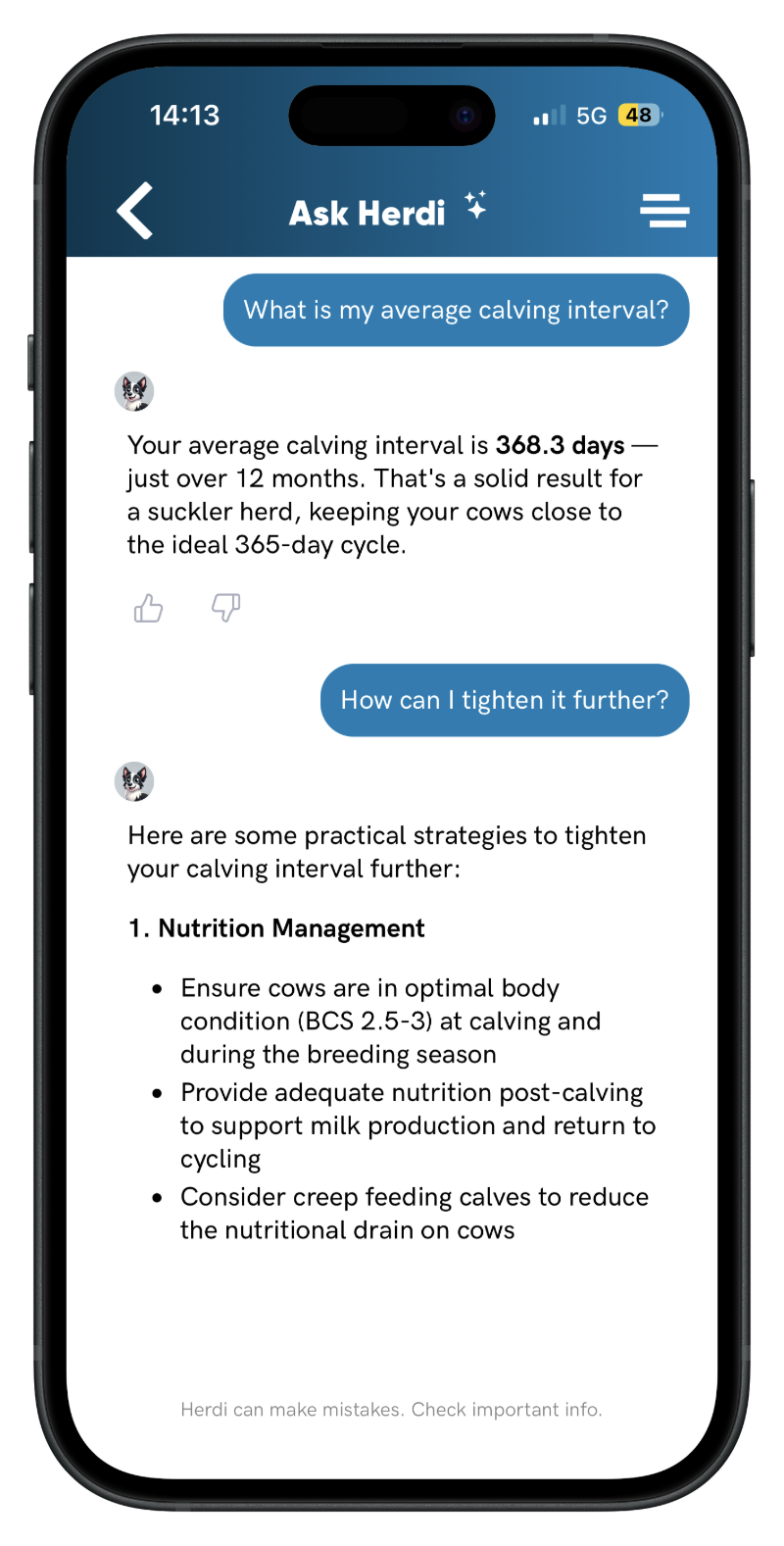
The metric he tracks is calving interval – how many days between calvings. The average is 420 days. What he wants is 365 or less, consistently, on a grass-only diet.
An animal that hits that mark year after year is worth its place. One that does not is quietly costing money.
Finding those animals used to take time. Now James uses Herd Intelligence – the artificial intelligence (AI) tool built into Herdwatch that works from your own farm data.
“It takes me 10, 15, 20 seconds and I’m suddenly aware that I’ve got eight superstar cows in the herd.”
Eight animals, identified instantly, that were doing everything right while the rest of the herd was getting equal attention.
That information changes decisions – about breeding, culling, where to focus on a farm where every input matters.
A farm that consistently makes money
James is clear that Herdwatch did not do the work. The years of hard decisions – that was him and his family.
But the tool helped.
“Herdwatch is worth every penny because it’s helping me be on top of my costs.
“It’s taken a farm that was losing money into a farm that consistently makes money at a decent rate. I’m proud of that achievement.”
For every Irish farmer who has ever been told their farm is too small, too marginal, too difficult – that line is worth sitting with.
A farm that was losing money. Now consistently profitable. Because someone got serious about the data behind it.
That’s not a hobby. That’s a business.
Try Herd Intelligence on your own farm.
Download Herdwatch FREE today here
Request a free quote here
Used by over 20,000 farmers across Ireland and the UK. Available on iPhone, Android, and desktop.
The post ‘Everyone said this farm would never make money. They were wrong’ appeared first on Agriland.ie .
Source: Agriland. Summary reproduced for informational purposes.
Related
 Agriculture
Why silage testing is a smart investment
When farmers are drawing up fodder budgets this month, it may be well worth their while to silage test the crop already in the yard. Despite the drought impacting fertiliser applications, a lot of farms will be hoping to get another cut in at the end of the mo
 Agriculture
Country diary: Rare Wensleydale sheep have their day in the sun | Andrea Meanwell
Garstang, Lancashire: With fedora and broken shepherd’s crook, I was a judge at an agricultural show, inspecting the mouths and fleeces of some fantastic breeds As I walked across the show field in the sunshine on my way to the secretary’s tent, my shepherd’s
 Agriculture
After decades of decline, New Zealand’s wool industry is making a comeback
Forty years ago there were more than 22 sheep to every New Zealander, but wool prices and production declined with the uptake of synthetic alternatives John Hargreaves’ family has farmed sheep and beef in Kaiwaka, north of Auckland, for generations. In the 196
 Agriculture
Are bluetongue-infected midges on the way from the UK?
If weather conditions allow the migration of infected midges from the UK across the Irish Sea to Ireland this autumn, we could see increased cases of bluetongue here. According to the National Disease Control Centre (NDCC) in Ireland, there has been a signific
Never miss a headline
The biggest stories in business and finance, delivered to your inbox. Join thousands of readers — unsubscribe any time.