How Johne’s disease is continuing to impact farm production
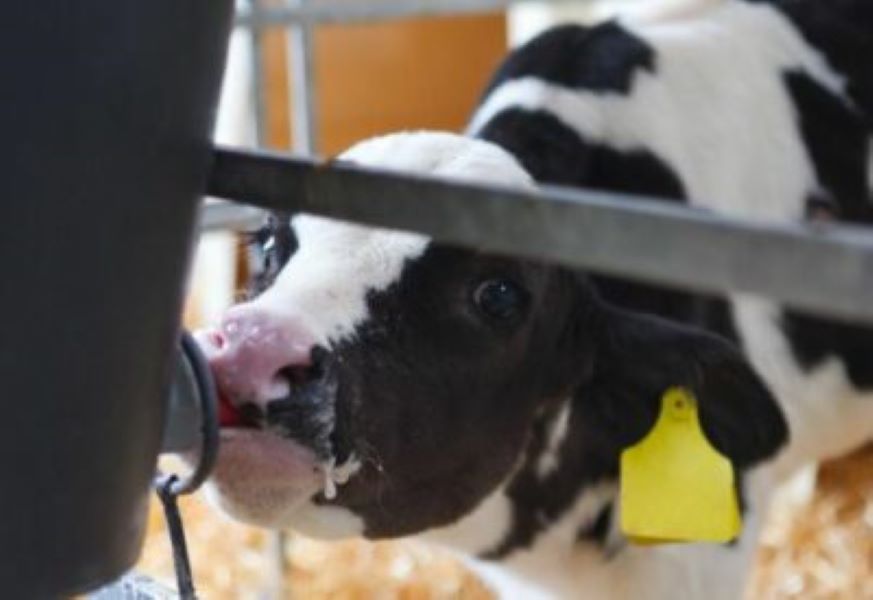
Young stock are at the greatest risk of contacting Johne’s disease, a notifiable disease in Ireland, but farmers can take measures to minimise the exposure to disease.
Johne’s disease is spread via the bacteria, Mycobacterium avium subspecies paratuberculosis (MAP).
It is a persistent bacterium that can survive for months on pasture and significantly longer in sheds.
The predominant clinical signs of Johne’s in cattle are a chronic severe watery diarrhea and a severe loss of body condition in spite of a good appetite.
Johne’s disease is spread via contact with infected faeces but is also commonly passed on through colostrum and suckling. Calves fed on whole milk or suckler calves are at higher risk of infection as a result.
New research from the Royal Veterinary College has shown that cows passed Johne’s antibodies onto calves via colostrum.
The research concluded that while these antibody measurements are not a diagnostic test for infection in newborn calves, they may eventually complement existing herd surveillance and risk assessment strategies that could help improve disease management and animal welfare.
The UK has a higher prevalence rate than Ireland for Johne’s disease, with more than 50% of herds affected.
Feeding calves
Farmers suffering from drought conditions are often feeding out silage, straw or hay to weanlings.
If these calves are being fed indoors in sheds that were previously used to house mature animals, a good power-hosing and disinfection will reduce the risk of transmission.
Farmers in the northern and some western counties will still have high grass growth rates. These areas should note that grazing calves and weanlings are at increased risk of infection where slurry has been spread recently.
Where calves are grazing, it is important to ensure older mature stock have not grazed recently, as undisturbed dung can carry infection.
For this reason, leader-follower systems offer the best protection against infection. This is not practical in most dairy systems but works well in suckler enterprises.
Symptoms
Johne’s infected cows can become infectious from two years-of-age, but symptoms can take years to develop. Clinical symptoms often occur only after five years-of-age.
Farmers must not wait for Johne’s positive cows to show symptoms before taking precautionary measures.
In dairy herds with high replacement rates, farmers may never see Johne’s symptoms despite persistent infection.
Farmers are advised that even when subclinical, Johne’s is estimated to cost the farmer €33/cow. For a 100-cow herd, this equates to €3,300/year.
According to AHI, Johne’s disease costs the Irish dairy industry between €11.24 million and €23.85 million per year through lost production and culled cows
Testing
The dairy herd is monitored via milk collections. Through co-ops, the Department of Agriculture, Food and the Marine (DAFM) conducts two yearly Bulk Tank Milk (BTM) tests during spring and autumn from each supplier. This programme began in 2019.
The BTM tests’ reliability is open to debate, as it requires a higher level of antibodies than a standard faecal test.
Initial data from 2022 suggests that it only identified 16% of positive cases based on the estimated national herd incidence of 30% at the time.
AHI confirmed to Agriland that identifying an exact number for prevalence is hard, as testing at a national scale is expensive and time-consuming, as blood or faecal tests are required to give accurate numbers.
However the BTM test is an indicator of high levels of infection in a herd.
It is estimated that the tests sensitivity improves where the herd’s prevalence rate is greater than 9% (9+ cows out of every 100 infected).
False positives are also possible with an estimated 5% of herds being falsely identified. TB tests or other similar bacteria exposure in particular can impact test accuracy.
AHI’s Irish Johne’s Control Programme helps farmers who apply to join by providing support and advise, on
Source: Agriland. Summary reproduced for informational purposes.
Related
 Agriculture
Why silage testing is a smart investment
When farmers are drawing up fodder budgets this month, it may be well worth their while to silage test the crop already in the yard. Despite the drought impacting fertiliser applications, a lot of farms will be hoping to get another cut in at the end of the mo
 Agriculture
Country diary: Rare Wensleydale sheep have their day in the sun | Andrea Meanwell
Garstang, Lancashire: With fedora and broken shepherd’s crook, I was a judge at an agricultural show, inspecting the mouths and fleeces of some fantastic breeds As I walked across the show field in the sunshine on my way to the secretary’s tent, my shepherd’s
 Agriculture
After decades of decline, New Zealand’s wool industry is making a comeback
Forty years ago there were more than 22 sheep to every New Zealander, but wool prices and production declined with the uptake of synthetic alternatives John Hargreaves’ family has farmed sheep and beef in Kaiwaka, north of Auckland, for generations. In the 196
 Agriculture
Are bluetongue-infected midges on the way from the UK?
If weather conditions allow the migration of infected midges from the UK across the Irish Sea to Ireland this autumn, we could see increased cases of bluetongue here. According to the National Disease Control Centre (NDCC) in Ireland, there has been a signific
Never miss a headline
The biggest stories in business and finance, delivered to your inbox. Join thousands of readers — unsubscribe any time.