Price swings in green diesel leave contractors counting the cost
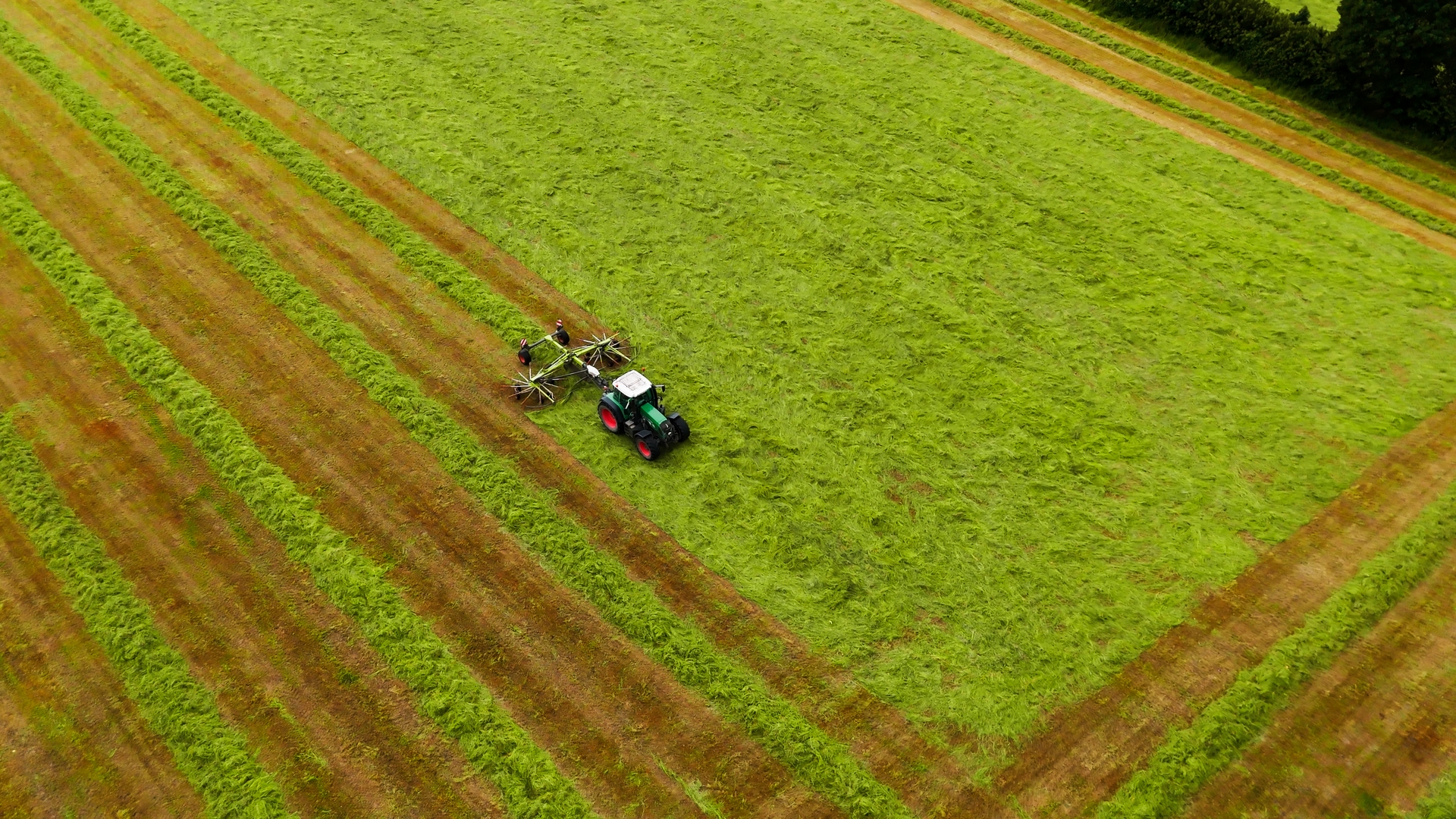
Volatile green diesel prices have become a major headache for contractors this year.
As the industry looks ahead, will 2027 offer greater stability or more of the same?
Two Munster-based agricultural contractors spoke to Agriland about the challenge to maintain profitability and balance inflated fuel prices.
Both contractors have similar business models and offer similar services and also own livestock but they both had very different outlooks on the current price of green diesel and what that might mean for their future operations.
Cash flow
According to the south Co. Tipperary contractor, the price hike will have a “big impact on cash flow”.
“You’re only six months into this high diesel price, but you’re not going to really get the effects of it.
“The effects of it aren’t really going to hit you for another 6-12 months.
“It’s the cash that’s the problem, it’s going to take cash flow out of businesses, and that’ll have a knock-on effect because people are charging whatever they’re charging,” they said.
The south Co. Tipperary contractor was also keen to point out that while the price of diesel is rising so are other costs.
They feel that many contractors have not felt the full effect of the Strait of Hormuz crisis because many had bought their resources before the conflict began.
The south Co. Tipperary contractor added: “Let’s say that contractors’ diesel bills are going to be €10,000 extra for example.
“At the end of the day, that €10,000 is gone out of cash flow and profitability.
“The priority all year was to get the work done, to get to everyone, and that’s the issue with it; people had diesel bought and it fluctuated in price.
“When people go down at the end of the year and do their books, that’s where the real issue is going to be, the sustainability of a lot of things will be no longer viable,” they said.
The contractor said for example fertiliser and plastic for bales were bought before the Strait of Hormuz crisis.
This contractor told Agriland that they are currently assessing their services and will decide what they will focus on next year.
“There are going to be major changes for 2027 in my business.
“I’m eliminating cutting paddocks, I won’t cut paddocks in future, and on top of that I won’t be doing small jobs where I’m putting out seven or eight bales.
“Spraying will only be done when the sprayer is on the tractor and it suits me,” they said.
They said that they do not plan to do jobs “just to please people”.
Co. Limerick contractor
According to a contractor based in west Co. Limerick the hike in fuel prices has created a “cash-flow” issue for agricultural operators.
According to the contractor, they are not so much worried about customers trying to pay, but more so customers’ ability to pay.
“We’re passing the increased cost onto our customers, but they have nobody to pass it on to, they’re stuck carrying the extra cost,” the contractor said.
They also warned that if prices continue to rise, contractors may be forced to carry more of the cost of business.
“10,000L of diesel before (the Strait of Hormuz crisis) roughly translated to €10,000; now that’s somewhere between €12,000 and €14,000.
“Everything across the board has gone up, from a bag of chips to plastic, everything is gone crazy,” they added.
According to the West-Limerick contractor: “A good day with us, we’d burn 3,500L of diesel, there’d be no day we don’t burn 1,000L”.
“A good day with us, we’d burn 3,500L of diesel, there’d be no day we don’t burn 1,000L,” the contractor said.
The west Co. Limerick contractor added that he was thankful that they did not have to consider closing down the business at this time.
According to this contractor the most pressing challenge is whether customers will be able to pay, as opposed to if they want to or not.
“I’m dreading the back end of the year,” they added.
In November and December last year the contractor found that “farmers wanted to clear their bills”.
But they do not beli
Source: Agriland. Summary reproduced for informational purposes.
Related
 Agriculture
Why silage testing is a smart investment
When farmers are drawing up fodder budgets this month, it may be well worth their while to silage test the crop already in the yard. Despite the drought impacting fertiliser applications, a lot of farms will be hoping to get another cut in at the end of the mo
 Agriculture
Country diary: Rare Wensleydale sheep have their day in the sun | Andrea Meanwell
Garstang, Lancashire: With fedora and broken shepherd’s crook, I was a judge at an agricultural show, inspecting the mouths and fleeces of some fantastic breeds As I walked across the show field in the sunshine on my way to the secretary’s tent, my shepherd’s
 Agriculture
After decades of decline, New Zealand’s wool industry is making a comeback
Forty years ago there were more than 22 sheep to every New Zealander, but wool prices and production declined with the uptake of synthetic alternatives John Hargreaves’ family has farmed sheep and beef in Kaiwaka, north of Auckland, for generations. In the 196
 Agriculture
Are bluetongue-infected midges on the way from the UK?
If weather conditions allow the migration of infected midges from the UK across the Irish Sea to Ireland this autumn, we could see increased cases of bluetongue here. According to the National Disease Control Centre (NDCC) in Ireland, there has been a signific
Never miss a headline
The biggest stories in business and finance, delivered to your inbox. Join thousands of readers — unsubscribe any time.